Engineered to withstand extreme radial, axial, and tilting moment loads under severe environmental conditions.
As the global energy matrix accelerates its shift toward decarbonization, Concentrated Solar Power (CSP) has emerged as a crucial baseload renewable resource. Unlike traditional photovoltaic (PV) generation, which is limited by instantaneous solar irradiance, CSP systems leverage thermal energy storage (typically utilizing molten salt) to dispatch reliable, dispatchable power 24/7. This capability positions CSP at the center of large-scale green energy grids worldwide, notably in high-direct normal irradiance (DNI) zones such as the Middle East, Northern Africa, the Southwestern United States, and Western China.
At the core of any high-efficiency CSP design—whether parabolic trough, power tower, or linear Fresnel—is the dynamic tracking accuracy. Heliostats and collector assemblies must continuously align with the sun's trajectory with sub-milliradian precision. A deviation of just a fraction of a degree can lead to severe optical loss, drastically decreasing the thermal output of the receiver. Consequently, the slewing drives and heavy-duty slewing bearings designed for CSP trackers must exhibit exceptional rotational accuracy, zero-backlash capabilities, and robust structural integrity.
Furthermore, CSP plants are typically located in arid, hostile desert locations. These environments subject critical transmission parts to intense ultraviolet radiation, extreme ambient temperature fluctuations (ranging from sub-zero nights to exceeding 50°C during mid-day), and abrasive sandstorms. Standard industrial slewing bearings are inadequate under these conditions. The industry requires specialized CSP slewing drives featuring advanced sealing systems, corrosion-resistant surface coatings, and optimized metallurgical formulations designed for long-term survival.
Procurement teams for utility-scale CSP projects face unique challenges when evaluating component manufacturers. Since these plants represent capital expenditures (CAPEX) with amortization periods of 25 to 30 years, long-term reliability and operational expenditure (OPEX) minimization are paramount. Global EPC (Engineering, Procurement, and Construction) companies look beyond initial price metrics, prioritizing suppliers who offer high information gain, structural transparency, and complete test documentation.
The primary purchasing criteria center around three major pillars:
Components must utilize premium alloy steels, such as 42CrMo or 50Mn, with precise induction-hardened raceways to prevent premature fatigue spalling and wear.
Dual-lip polyurethane or FKM (Viton) seals are essential to prevent microscopic quartz dust from entering the bearing raceway and degrading the lubricant.
EPCs demand comprehensive documentation, including non-destructive testing (NDT), ultrasonic flaw detection, and finite element analysis (FEA) safety margins.
To meet these requirements, manufacturers must transition from simple component fabricators to integrated engineering partners. This transition involves providing end-to-end design validation, tailoring gear ratios to match specific motor drives, and manufacturing slewing systems that optimize the total cost of ownership (TCO) across the project's lifecycle.
Established in 2022, Jiangsu Manchen Transmission Technology Co., Ltd. has rapidly emerged as a leading professional manufacturing enterprise integrating design, research, development, and sales. Strategically located in Huangtu Town, Jiangyin City, Jiangsu Province, the factory benefits from access to East China's logistics hubs, ensuring efficient global and domestic transport networks.
Equipped with mature technical conditions and advanced production machinery, Jiangsu Manchen leverages precise forging, heat treatment, and precision processing techniques. We deliver high-load-bearing, high-strength, and long-life transmission solutions tailored for challenging operational environments. Our engineering solutions support applications across construction machinery, medical equipment, intelligent warehousing, the photovoltaic/CSP solar sector, port machinery, industrial robotics, and environmental protection equipment.
By utilizing advanced testing equipment and a comprehensive quality control system, we guarantee product traceability from raw material selection to delivery. All components conform to both domestic and international industry standards, reflecting our commitment to "quality first, mutual cooperation."

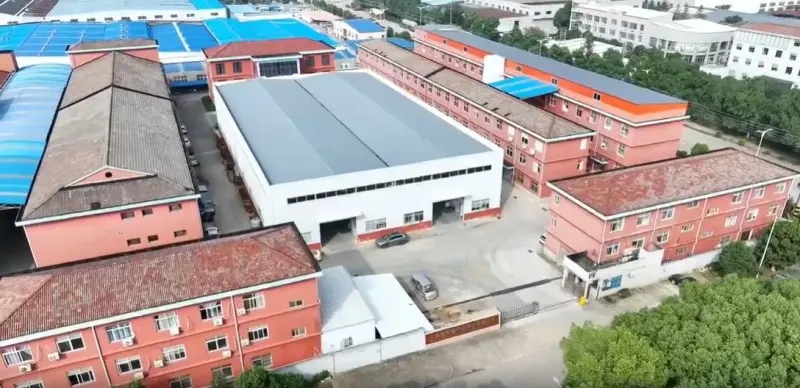
Inside our state-of-the-art workshop, where strict tolerance control and metallurgical precision are integrated into every phase of production.
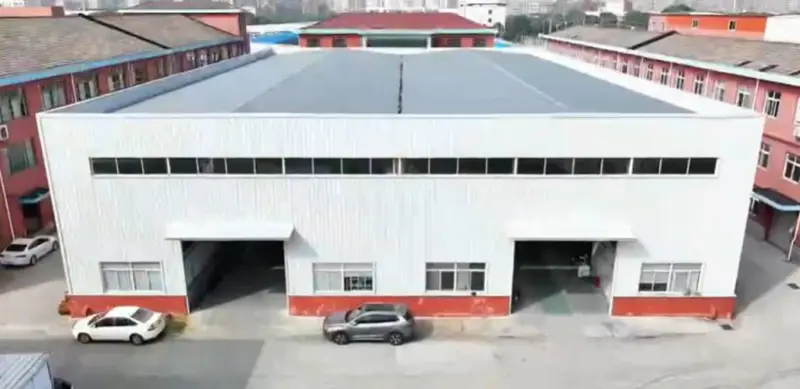
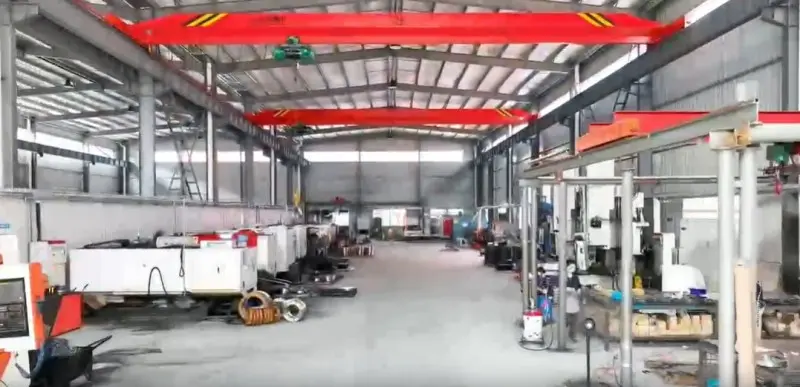
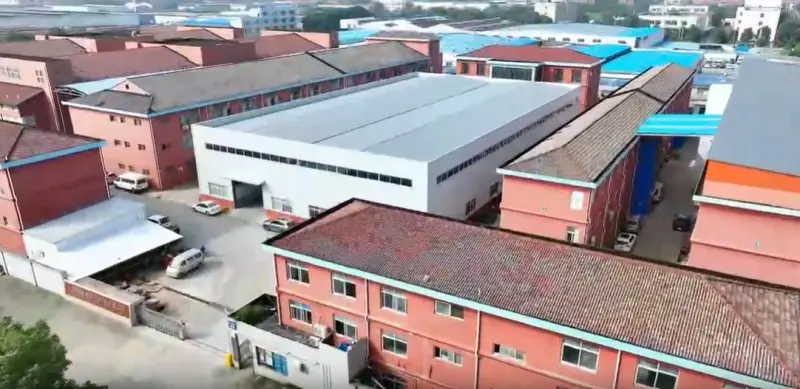
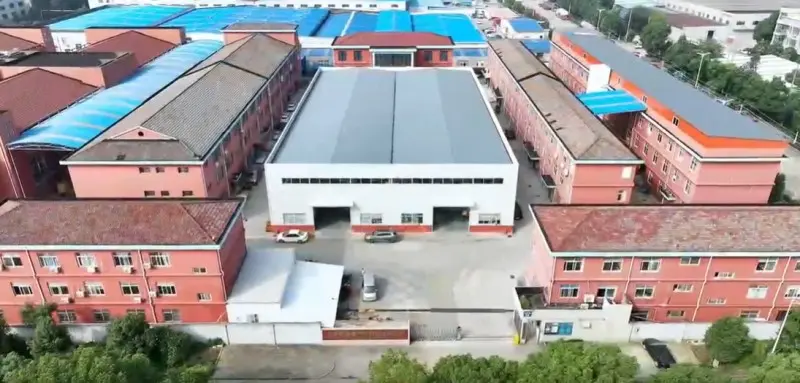
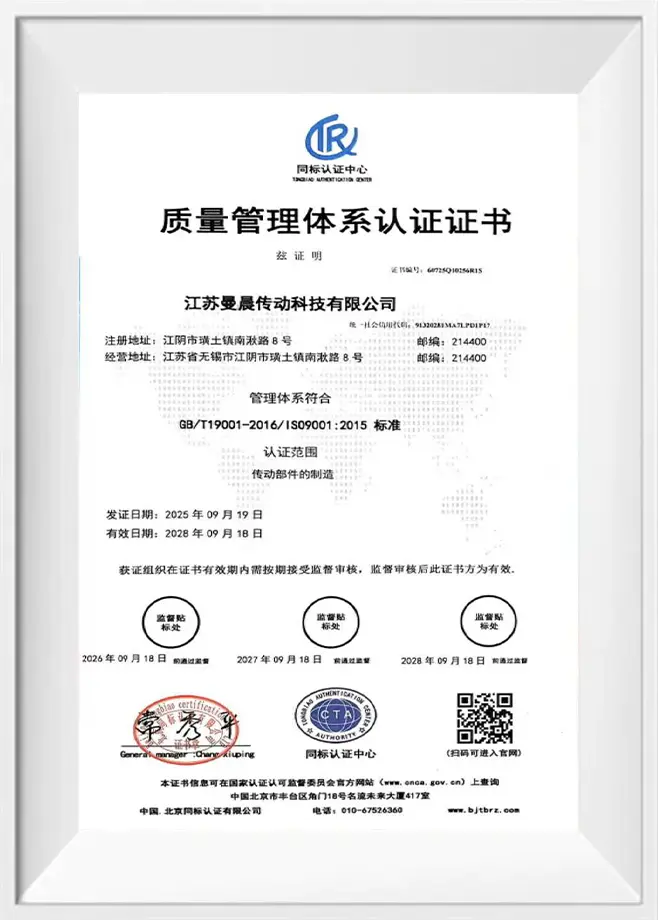
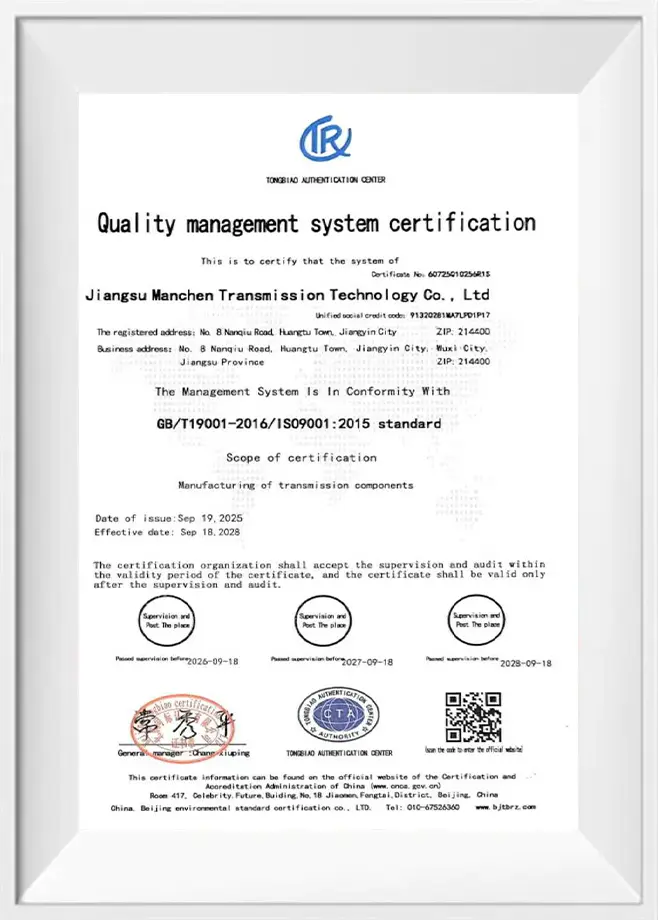
Our commitment to reliable performance and structural integrity is validated by international regulatory standards.
The rise of China’s advanced manufacturing sector, often referred to as China Factory 4.0, has redefined global supply chains for heavy transmission components. The shift from low-cost assembly to high-precision engineering is driven by substantial investments in automation, raw material access, and integrated production ecosystems. For global CSP projects, this translates into shorter lead times, consistent tolerances, and enhanced resilience against raw material and shipping disruptions.
At Jiangsu Manchen, this manufacturing shift is reflected in our structured production process. By integrating raw material sourcing, forging, rough machining, thermal treatment, precision grinding, and assembly within a localized geographic radius, we minimize supply chain vulnerability. This close proximity ensures that our forging quality, hardening depths, and surface finishes remain consistent.
Furthermore, our direct access to high-quality domestic alloy steel mills allows us to secure reliable quantities of raw materials even during market volatility. By monitoring carbon equivalents and maintaining trace element control during steel melting, our suppliers ensure the basic workability of the forgings. This foundational quality is essential for preventing cracks during subsequent induction hardening cycles.
We provide tailormade engineering and custom packaging design to optimize bearing life and structural compatibility.










Selecting the appropriate slewing bearing topology for a CSP project requires evaluating several variables: load profile, tracking precision, space constraints, and cost limitations. An incorrect configuration can lead to premature failure or insufficient tracking accuracy.
Below is an engineering overview of the primary bearing structures utilized in tracking systems:
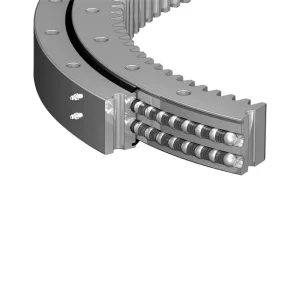
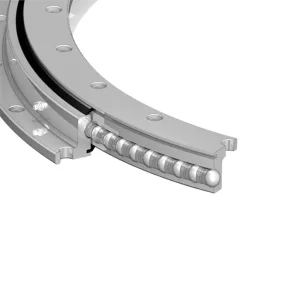
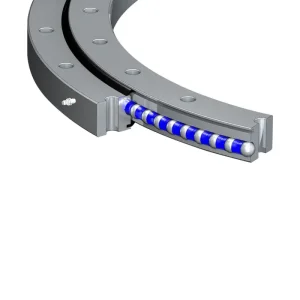
1. Single-Row Ball Slewing Bearings (External/Internal Gear or Gearless): These designs represent the most common configuration for standard dual-axis PV and light CSP heliostats. Utilizing a four-point contact geometry, they absorb radial, axial, and tilting moment loads simultaneously. Their main advantages include a simple design, cost efficiency, and ease of installation.
2. Double-Row Equal-Diameter Ball Bearings: By incorporating two rows of rolling balls, this design significantly increases the axial load capacity and tilting moment resistance. It is well-suited for heavy-duty applications, such as large parabolic trough collectors and major tower heliostats, where high wind loads generate significant overturning moments.
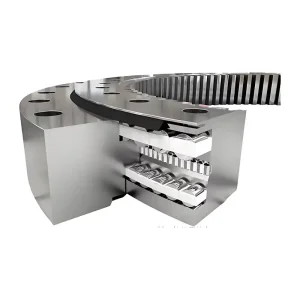
3. Three-Row Cylindrical Roller Bearings: This design represents the highest load-capacity option available. Featuring three independent rows of rollers (axial, radial, and stabilizing), it segregates loads to eliminate local stress concentrations. This configuration is typically reserved for massive, utility-scale tower heliostats or heavy machinery applications (such as cranes, offshore platforms, and port equipment).
4. Single-Row Cross-Roller Bearings: In this configuration, cylindrical rollers are arranged alternately at a 90-degree angle. This setup enables high rotational accuracy, minimal backlash, and excellent stiffness. Cross-roller bearings are preferred for high-precision torque systems and robotic trackers, where alignment errors must be kept to a minimum.
In the solar energy sector, environmental conditions vary significantly by region. A CSP tracking component operating in Spain's arid plains faces different challenges than one installed in the high-altitude, low-temperature regions of Qinghai, China, or the high-humidity coastal areas of Western Australia. Engineers must adapt their component designs to match these specific local conditions:
1. Desert and High-Dust Environments (MENA Region): Sandstorms generate high amounts of abrasive dust particles. If these enter the bearing raceway, they accelerate wear on both the rolling elements and the cage. To prevent this, bearings are equipped with double-lip FKM seals and specialized protective shrouds. Additionally, customized lubrication ports allow for purging cycles that flush out contaminated grease.
2. High-Altitude, Extreme Cold Regions (Tibet, Northern China): In these locations, ambient winter temperatures can drop below -40°C. Standard carbon steel can become brittle at these temperatures, increasing the risk of structural failure. To prevent this, we specify low-temperature impact-tested steels, such as 42CrMo4, and pair them with low-viscosity greases designed to maintain low startup torque under freezing conditions.
3. High-Humidity and Coastal Environments (Chile, Southern Europe): Marine air, combined with humidity, accelerates galvanic and atmospheric corrosion. For these projects, bearings undergo protective surface treatments, including zinc-rich epoxy coatings, thermal spray galvanizing, or specialized passivation. These coatings shield the underlying steel from salt spray, preventing surface oxidation and premature structural degradation.
Addressing the critical engineering questions, material specs, and performance inquiries raised by global procurement and EPC teams.
Explore our secondary lineup of internal gear, external gear, and gearless rotational configurations.
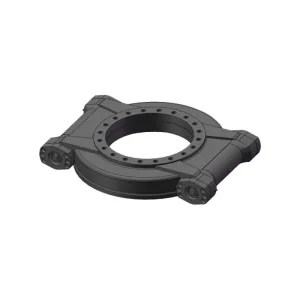
We maintain collaborative relationships with domestic enterprises and focus on technological upgrades in the transmission field. We aim to supply global customers with reliable, cost-effective rotary transmission products and engineering services.
 Manchen Transmission